
eCommerce has emerged to become a critical component of many business strategies, and technology has revolutionised how companies interact with their customers to drive sales.
Benefits of eCommerce Websites
Before we look at the examples of eCommerce websites, it is important to know the benefits of them and how they drive sales:
Wider reach: eCommerce websites break geographical barriers, allowing even small businesses to access potential client across the globe to expand their market significantly.
Enhanced customer experience: an eCommerce website allows for a tailored and convenient shopping experience. If we look at companies such as Amazon where the buying process is super slick (One click checkout), offering product recommendations, reviews, scheduled repeat orders and one day delivery. This experience is about satisfying customer needs and a business strategy for customers to keep returning to the site.
Customer engagement and loyalty: If you use an eCommerce website, you can implement personalised interactions, loyalty programs, and excellent customer services to help build long-term relationships.
Cross-platform marketing and sales: As part of the overall business strategy, using social media, email marketing, and SEO to collaborate and integrate with e-commerce can help enhance the user experience with individual promotions and offers or drive awareness of the business and the website.
Data-driven insights: eCommerce websites enable powerful insights into customer behaviour, preferences, and buying patterns. This data helps you make informed decisions about the products and services you offer and can assist with tailored marketing.
Brand Building: eCommerce websites can serve as a powerful tool for brand building. If the design and User experience are truly considered, they can help you build a unique identity that delivers consistent experiences to your customers.
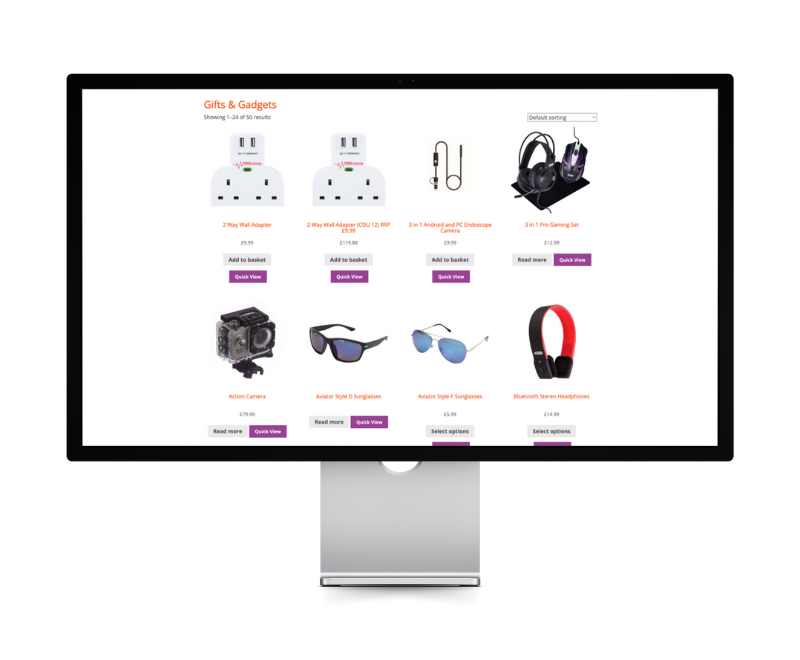
Examples of eCommerce websites
Below is a list of the different types of eCommerce websites, along with an example of widely known brand names that use them and their key benefits.
Manufacturing eCommerce websites
Type: B2B
Brand example: JCB (Construction and Agricultural Machinery Manufacturer)
Key Features: Detailed product catalogues, customised machinery options, client account systems, and integration with manufacturing processes and logistics.
Retail Product Business eCommerce Websites
Type: B2C (Business-to-Consumer)
Brand Example: Argos (Retail Chain)
Key Features: User-friendly interface, product categories, customer reviews, online and in-store integration.
Digital Products eCommerce Websites
Type: B2C or B2B
Brand example: Sage (Business Management Software)
Key Features: Digital product catalogue, licensing and subscription management, customer support portal.
Handmade or Artisanal Product Business eCommerce Websites
Type: C2C or B2C
Brand Example: Not On The High Street (Marketplace for Unique Products)
Key Features: Individual seller storefronts, product uniqueness, customer reviews, gift-oriented services.
Drop shipping eCommerce Websites
Type: B2C
Example: Gymshark (Fitness Apparel)
Key Features: Integration with manufacturing and distribution partners, real-time inventory updates, and strong brand marketing.
Wholesale Business eCommerce Websites
Type: B2B
Brand Example: Booker Wholesale (Food Wholesale)
Key Features: Bulk ordering system, trade account management, special offers for bulk purchases, online order tracking.
Niche Product eCommerce Websites
Type: B2C
Brand Example: Rapha (Cycling Clothing and Accessories)
Key Features: Community features like club membership, targeted marketing, and detailed product descriptions for enthusiasts.
Service-Based Business eCommerce Websites
Type: B2C or B2B
Brand Example: Checkatrade (Trade Services Directory)
Key Features: Extensive directory of vetted tradespeople, customer reviews and ratings, easy search functionality, and options for obtaining quotes directly through the platform.
The above offers a glimpse into the different examples of eCommerce websites and how they are used.
Be mindful that an eCommerce website is not just an online transactional platform. It should be used as a strategic tool for businesses to understand their customers and their buying behaviours to maximise their operations. The data insights you can glean from eCommerce websites enable businesses to market appropriately and, in turn, drive sales and growth.
Call Us Now to Start Your eCommerce Website Journey!
Want to unleash the potential of your business with an eCommerce website? Contact Bubble now to understand how your business can thrive in a digital world.